 AK RFP Hub
Nothing gets past it.
And it shows its work.
Last week, a hazmat-testing RFQ went up on the Kodiak Island Borough website on a Tuesday afternoon. Here’s what happened to it — and what happens to every opportunity posted anywhere in Alaska.
Somewhere you weren’t looking
Alaska’s agencies post work in thirty-plus different places — federal databases, state portals, borough sites, school districts, utilities, tribal orgs. Nobody can watch them all. We do, around the clock.
Thirty-plus channels, checked around the clock. Every source is a publicly posted government solicitation, bid, or grant notice — always verify details with the issuing agency before bidding.
Read like an estimator would
A 42-page packet becomes the facts you’d check first — scope, owner, deadline, site, bonding, the gotchas. Done once, for everyone.
Digital PDFs are read in-house; scanned plats go to a layout-aware parser, and site maps are captioned by vision AI. Nobody ever re-reads the packet — the record is computed once and shared across every client.
Your shop, described once
The other half of every judgment is you: what you do, the words a bid clerk would use for it, what you can bid as, and how far you’ll travel.
Give us your website — or a couple of sentences — and onboarding drafts your profile: the work you do, the terms a bid clerk would use for it, what you can bid as, and how far you’ll travel. Every piece is editable, at signup and any time after.
Then we judge all of it. Every single one.
A search engine hands you a shortlist — and everything it didn’t retrieve is invisible. You can never ask “what did it miss?” So we don’t search. We fill in the whole grid.
Not a search. Not a shortlist. A verdict for every open opportunity in Alaska — new postings judged within minutes, and if a single pair is ever missed, the system trips its own alarm.
Everything, accounted for
Your feed opens with a number you can check — and every opportunity behind it is somewhere on the page.
The likely fits open your morning. The unlikely pile stays on the page. And what your own travel or size filters exclude stays visible — a setting you can change, never a blind spot. Same verdicts drive search, filters, and the map.
The evidence layer
A fit that only shows up on page 19 of the attachments is still a fit. So for every opportunity, we search the parsed documents for the words that are distinctive to your profile — the rare ones, not “contractor” or “Alaska” — and cut short passages around each hit.
Those passages go to the judge with the title and summary, and the rule is strict: a bucket above unlikely needs something the text actually says. Insurance clauses, cited regulations and safety boilerplate don’t count, even when they contain your words.
The judge reads every opportunity regardless, so a weak signal can’t hide a good fit. The excerpts make the judgment sharp; the judge makes the coverage complete.
- …disciplines required of the design team: civil, structural, and a HAZMAT consultant for the pre-renovation survey…
- …remove and dispose of asbestos-containing floor tile and mastic in rooms 104–112 per 18 AAC 50…
- …Contractor shall maintain pollution liability insurance of…ignored · boilerplate
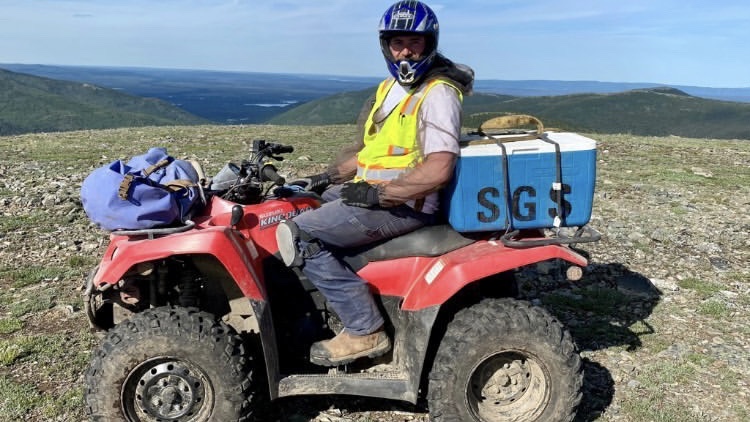
AK RFP Hub is built by Kai Myers, an environmental scientist in Anchorage who ran remote contaminated-site investigations for an Alaska remediation contractor before building software for the field. K.AI Consulting builds applied-AI tools that put serious automation in reach for Alaska businesses, no enterprise contract required. kaiconsulting.ai ↗
See your own grid filled in
Create an account and every open Alaska opportunity is judged against your shop — the fits up top, everything else listed underneath, every morning.
Get started $0 today · 14-day free trial · cancel anytime